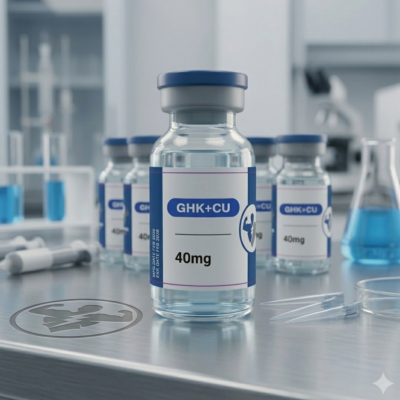
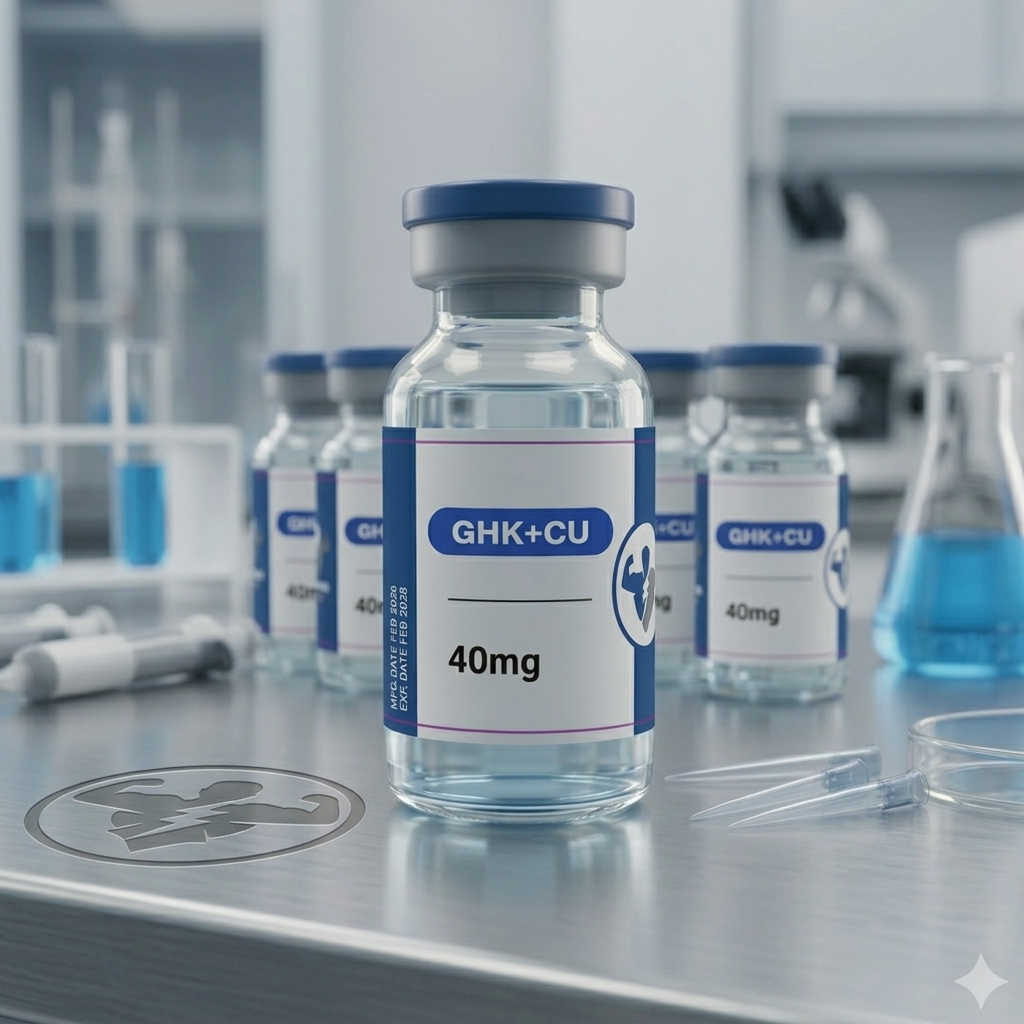
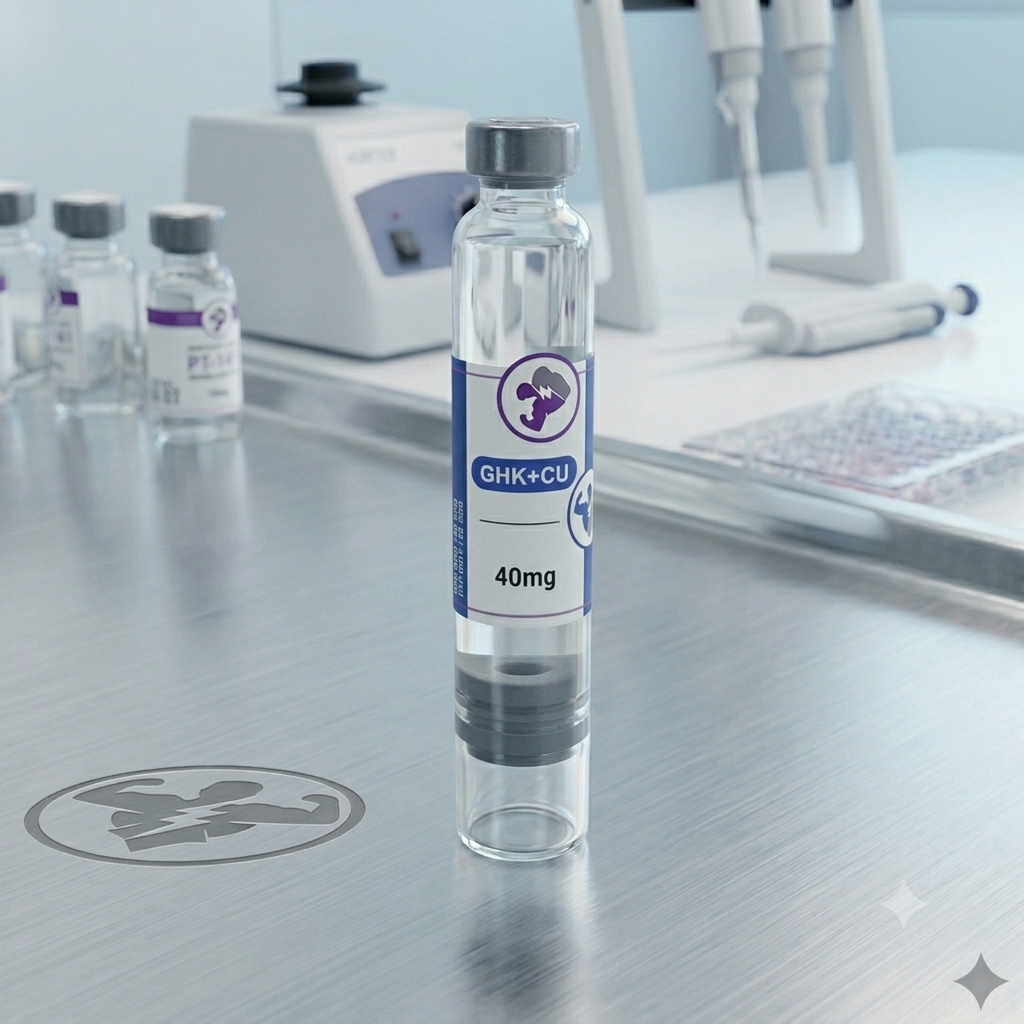
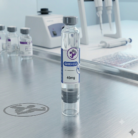
GHK-Cu (Copper Tripeptide-1) Injector Pen Refill
Hercules Labs provides premium-grade GHK-Cu, a naturally occurring copper-peptide complex that serves as a vital signaling molecule for metal ion transport and cellular regulation. Comprised of the tripeptide glycyl-L-histidyl-L-lysine chelated with a divalent copper ion, this high-affinity complex is an essential tool for researchers investigating copper-mediated biochemical pathways.
- Estimated Delivery : Up to 4 business days
- Free Shipping & Returns : On all orders over $200
GHK-Cu (Copper Tripeptide-1) Injector Pen Refill
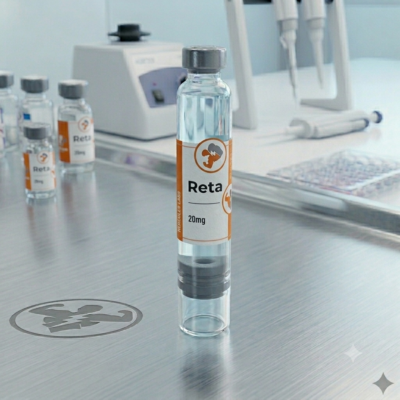
40mg Precision Matrix Cartridge
Hercules Labs provides premium-grade GHK-Cu in a high-performance 40mg Injector Pen Refill format. This pre-filled, drop-in cartridge represents a naturally occurring copper-peptide complex engineered for rapid, automated implementation into advanced laboratory delivery configurations.
Comprised of the tripeptide glycyl-L-histidyl-L-lysine chelated with a divalent copper ion, this high-affinity complex serves as a vital signaling molecule for investigating metal ion transport, extracellular matrix dynamics, and cellular regulation. Designed specifically to interface with metered injector pen mechanisms, this refill configuration ensures absolute chemical stability, micro-dose precision, and strict sterility across all extended testing cycles.
Technical Specifications
| Parameter | Specification |
| Product Format | Automated Injector Pen Refill Cartridge |
| Active Complex | GHK-Cu (Copper Tripeptide-1) |
| Total Core Mass | 40mg |
| Matrix Appearance | Clear, intense blue liquid solution |
| Delivery Mechanism | Pre-configured for automated micro-dosing protocols |
Mechanism of Action & Research Description
Copper is a fundamental trace element required for enzymatic and structural proteins involved in redox balance and extracellular matrix organization. The Hercules Labs GHK-Cu refill cartridge acts as a regulated carrier, facilitating the precise delivery of bioavailable copper to target biological systems.
Preclinical research indicates that automated, micro-metered exposure to GHK-Cu can influence gene expression patterns and signaling pathways related to:
-
Extracellular Matrix (ECM) Dynamics: Investigating tissue remodeling, structural integrity signaling, and cell-matrix interactions.
-
Oxidative Stress Response: Studying the modulation of cellular antioxidant pathways and redox-sensitive signaling cascades.
-
Cellular Turnover Matrix: Analyzing real-time growth, differentiation, and survival rates in various experimental models.
Technical Storage & Initialization
This 40mg fluid matrix is manufactured to preserve the delicate peptide-metal coordination architecture:
-
Refill Installation & Priming: Follow standard laboratory protocols for seating and priming the 40mg cartridge within automated delivery mechanisms to ensure uniform fluid distribution and micro-dose precision before initiating a test sequence.
-
Chemical Safeguards: Ensure the testing environment remains free of competing metal-chelating agents (e.g., EDTA), as these will actively disrupt the copper coordination complex.
-
Temperature Control: Store all un-activated refill cartridges in a cool, dark place out of direct sunlight. Once installed and activated, the injector pen housing the cartridge must be kept refrigerated between 2°C and 8°C to prevent enzymatic or moisture-induced degradation.
Primary Research Applications
1. Metal Homeostasis Probing
Serving as a molecular tool to study copper transport and binding kinetics. The deployment of pre-configured injector pen refills provides a steady, metered delivery mechanism, allowing investigators to isolate and track rapid kinetic changes in copper uptake.
2. Signaling Pathway Analysis
Investigating copper-dependent pathways linked to tissue remodeling and cellular growth. High-purity GHK-Cu acts as a reliable variable for exploring cellular proliferation matrices without introducing foreign contaminants.
3. Gene Expression Studies
Utilizing GHK-Cu in cell-based assays to examine transcriptomic changes and ECM regulation, helping researchers map out complex pathways associated with cellular longevity and systemic repair.
4. Bioavailability Models
Researching peptide-metal interactions in both in vitro and ex vivo environments, establishing precise control baselines for how chelating architectures alter localized tissue dynamics.
Precision Sourcing from Hercules Labs
Hercules Labs is dedicated to providing the scientific community with high-purity research reagents. By delivering our ultra-pure GHK-Cu matrix in an advanced, metered 40mg injector pen refill format, we supply the precision, standalone compound architecture required for consistent, reproducible results and critical research breakthroughs.
LEGAL DISCLAIMER: All products provided by Hercules Labs are strictly for research and laboratory use only. These substances are not intended for human or animal consumption. They are not to be classified as drugs, food, or cosmetics. Handling must be restricted to qualified professionals who acknowledge the inherent risks and responsibilities of laboratory research.